
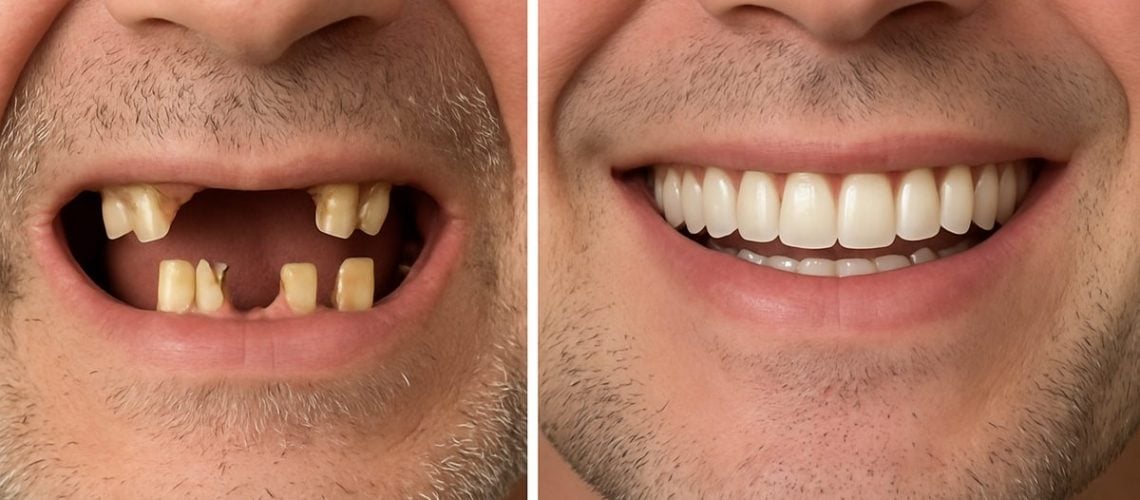
If you’re reading about the best denture implants, you or a loved one likely have many missing teeth, loose dentures, or trouble eating and speaking clearly. This guide explains what people mean by the best denture implants, the main options available, who makes a good candidate, what the treatment looks like, and how to pick a provider. Read on for clear, practical information so you can feel confident asking the right questions at your consultation.
What Are Denture Implants?
Denture implants are dental implants used to support or retain a denture. Unlike traditional removable dentures that sit on the gums, implant-retained dentures snap onto small attachments on dental implants, and implant-supported (fixed) dentures are screwed or cemented onto dental implants. Both options use titanium or zirconia posts placed into the jaw to anchor the denture and give far greater stability than conventional dentures.
Types of denture implant solutions
– Implant-retained overdentures (bar or ball attachments): A few dental implants (often 2–4) hold a removable denture in place. The denture snaps on and off for cleaning. This is cost-effective and improves stability a lot compared with regular dentures. – Fixed full-arch prostheses (All-on-4 / All-on-6 style): A full set of teeth is attached permanently to 4–6 dental implants. These feel and act more like natural teeth and are not removed by the patient. – Zygomatic dental implants for severe upper-jaw bone loss: Longer dental implants anchor in the cheekbone (zygoma) when the upper jaw lacks bone. This avoids extensive grafting for select patients.
Why Choose the Best Denture Implants
Denture implants deliver clear benefits: much better stability, improved chewing efficiency, clearer speech, and greater comfort. Dental implants also help preserve jawbone by transmitting chewing forces to bone, which slows bone loss common with traditional dentures. Overall, dental implant solutions often restore confidence, allow a more varied diet, and reduce denture sores and slippage.
Who Is a Good Candidate for Denture Implants?
Good candidates generally have healthy gums and enough jawbone volume for dental implant support or are willing candidates for grafting. Key checks include: – Oral health: No uncontrolled gum disease or active oral infections. – Jawbone volume: Enough bone to hold dental implants or willingness to undergo grafting or zygomatic options. – Medical factors: Diabetes should be well controlled; smoking increases risks; certain medications (like bisphosphonates) require discussion with your surgeon and physician. – Age and expectations: Age alone is not a barrier. Candidates should have realistic expectations about treatment time, healing, and maintenance.
Step-By-Step: What to Expect During Implant Denture Treatment
Consultation & digital planning
Your initial visit includes a clinical exam and 3D CBCT imaging to map bone and nerves. Intraoral scans and digital planning let the team design dental implant positions, prosthesis shape, and whether same-day teeth are possible.
Surgery day
On surgery day, dental implants are placed under local anesthesia with sedation if desired. Some patients receive a provisional denture or fixed temporary that day depending on the plan. Procedures are predictable when planned digitally and done by experienced surgeons.
Healing and final restoration
Osseointegration (bone bonding to the implant) typically takes 3–6 months. Follow-up visits monitor healing. Once stable, the final prosthesis—acrylic or zirconia teeth on a metal framework—are fitted and adjusted for comfort and function.
Materials & Design: Choosing the Right Denture Implants
Dental implants are usually titanium or zirconia. Titanium has a long track record; zirconia is an alternative for patients with metal concerns. Prosthesis materials range from acrylic (lighter, cheaper, easier to repair) to milled zirconia (stronger, more esthetic, longer lasting). Fixed designs feel more natural but require careful hygiene; removable overdentures make cleaning easier and can be less costly.
How to Choose the Right Provider for the Best Denture Implants
Look for board-certified oral and maxillofacial surgeons or dental specialists with specific experience in full-arch restorations. Ask about: – Case experience and before-and-after photos. – Technology: CBCT, dynamic surgical guidance, digital scans, and in-house lab capabilities speed care and improve precision. – Anesthesia options and coordination with your dentist for long-term care. – Clear cost estimates, implant brands used, and follow-up guarantees.
About Texas Center for Oral Surgery & Dental Implants (Light Practice Overview)
Texas Center for Oral Surgery & Dental Implants offers board-certified oral and maxillofacial surgeons with deep experience in full-arch dental implant restorations. They use a fully digital in-house lab and technologies like X-Nav dynamic guidance, CBCT scans, Trios intraoral scanning, zirconia milling, and 3D printing. On-site IV sedation, PRF for improved healing, and single-day full-arch options are available for appropriate candidates.
Cost, Insurance & Financing for Denture Implants
Costs vary by number of dental implants, need for bone grafting or sinus lifts, and the prosthesis material and lab work. Fixed zirconia arches cost more than acrylic overdentures. Some dental insurance may cover part of the restorative work but rarely covers the full implant cost. Many practices offer financing plans, third-party medical credit, or staged treatment to spread cost—ask about itemized estimates before starting.
Common Questions About Denture Implants
Q: How long do implant dentures last? A: Denture implants can last decades with good care; prostheses may need repairs or replacements over time. Q: Is the procedure painful? A: Most patients report manageable discomfort controlled with medication and benefit from sedation options during surgery. Q: Can I eat normally afterward? A: Yes. Chewing function improves greatly versus traditional dentures. Hard foods may be reintroduced gradually per your surgeon’s guidance.
Improve Your Smile With Denture Implants, Today!
The best denture implants restore function and confidence long-term. Bring a list of medications, medical history, photos of your smile, and questions about dental implant brands and technology to your consultation. If you’re ready to learn which dental implant option fits your needs, schedule a consultation to review digital scans and a personalized treatment plan.