
Causes and risk factors for implant complications
Preventing implant complications: daily care, habits, and maintenance for long-term success
Prevention greatly reduces the chance of implant complications and the need for complex revision treatment. Small daily steps and regular professional checks protect the implant, surrounding bone, and soft tissues for many years.
Daily home care
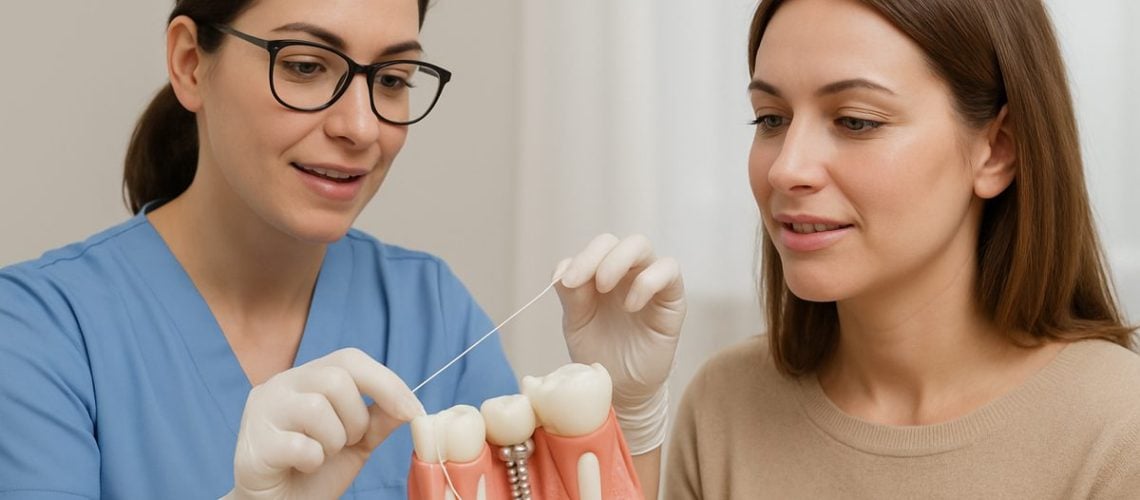
Use a soft-bristled brush and clean around the implant crown with gentle, 45-degree angled strokes at the gum line. Clean the sides of the implant and between the teeth daily with an appropriately sized interdental brush — avoid metal picks, which can scratch implant restorations. If you prefer, use a water flosser or floss with a floss threader to reach under implant bridges. Use a low-abrasive toothpaste and follow any antimicrobial rinse instructions from your provider. Brush twice daily and clean between teeth once daily.
Professional maintenance schedule
Most patients benefit from hygiene visits every 3–6 months, depending on their risk. During maintenance visits, the clinician should review the implant charting, gently probe peri-implant tissues to measure pocket depths, assess the restoration and occlusion, and take radiographs when changes are suspected or to confirm bone levels. Make sure your hygienist and dentist document a baseline exam after restoration delivery and compare that baseline at each visit.
Modify risk behaviors
Stop smoking and reduce tobacco use — smoking significantly raises the risk of infection and bone loss around implants. If you have diabetes, work with your medical team to keep blood sugar controlled, as poor control increases infection risk and slows healing. Tell your surgeon and dentist about any medications that affect bone or immune function (e.g., bisphosphonates or long-term steroids); do not stop prescription medications without talking to your physician. Regular medical and dental communication lowers complication risk.
Protect the implant mechanically
If you grind or clench, a custom night guard will distribute forces and protect implants from overload. Have occlusion checked soon after the prosthesis is placed and at follow-ups to catch high contacts early. Avoid hard, sticky, or traumatic foods for the first few weeks after placement and follow your surgeon’s timeline before resuming normal chewing. Early mechanical protection prevents loosening, fracture, and bone stress.
Early reporting and tracking
Report early signs such as new bleeding around the implant, swelling, persistent or worsening pain, foul taste or drainage, or any mobility of the crown or implant right away. Early evaluation often allows simple, non-surgical care to stop problems from progressing. Take photos of red or swollen areas and keep a log of symptoms between visits so your care team can act quickly and preserve the implant.
Diagnosis and treatment options for implant complications
When an implant complication is diagnosed, treatment can range from non-surgical care to complex revision surgery. Patients in Dallas–Fort Worth should expect clear planning, realistic recovery timelines, and close follow-up to restore function and oral health.
Types of revision procedures
Non-surgical options may include intensified debridement, localized antimicrobial therapy, and occlusal adjustments to reduce trauma. These measures can control early peri-implant inflammation without cutting tissue. Surgical revision may be needed for advanced problems and includes flap surgery to clean infected bone, guided bone regeneration or bone grafting to rebuild lost support, implant removal and staged replacement if the implant is failing, sinus repair when the maxillary sinus is involved, and nerve exploration when neurologic symptoms occur.
What to expect during the specialist visit and surgery
A specialist visit usually starts with updated imaging — often a CBCT — and digital surgical planning to map bone, nerves, and sinuses. Your surgeon will review anesthesia options (local, IV sedation, or general anesthesia) and discuss the plan, potential complications, and the timing of provisional restorations. In many cases, guided surgery and on-site digital workflows enable precise, predictable revisions and the option of same-day provisional teeth when appropriate.
Typical recovery timeline and home care
Expect the first 48–72 hours to be the peak of swelling and discomfort, which can be managed with prescribed pain medication, cold packs, and a soft diet. Take antibiotics and antiseptic rinses as directed. Sutures are commonly checked or removed at 7–10 days. Soft-tissue healing is usually well underway by 4–6 weeks; bone grafts and full integration can take several months (commonly 3–6 months) before final restorations are placed. Follow post-op instructions on oral hygiene, avoid smoking, and report any worsening pain, fever, increased drainage, or numbness immediately.
When to choose a Dallas–Fort Worth specialist
Seek a specialist if you have persistent implant mobility, spreading infection, exposed implant threads, large bone loss, sinus involvement, ongoing nerve symptoms, or a failed implant after prior attempts to save it. Specialists offer advanced imaging, guided revision techniques, and complex grafting skills, thereby improving outcomes. For patients in Dallas–Fort Worth, a board-certified oral and maxillofacial surgeon can coordinate care with your dentist and medical providers to plan safe, evidence-based revision treatment and follow-up.