
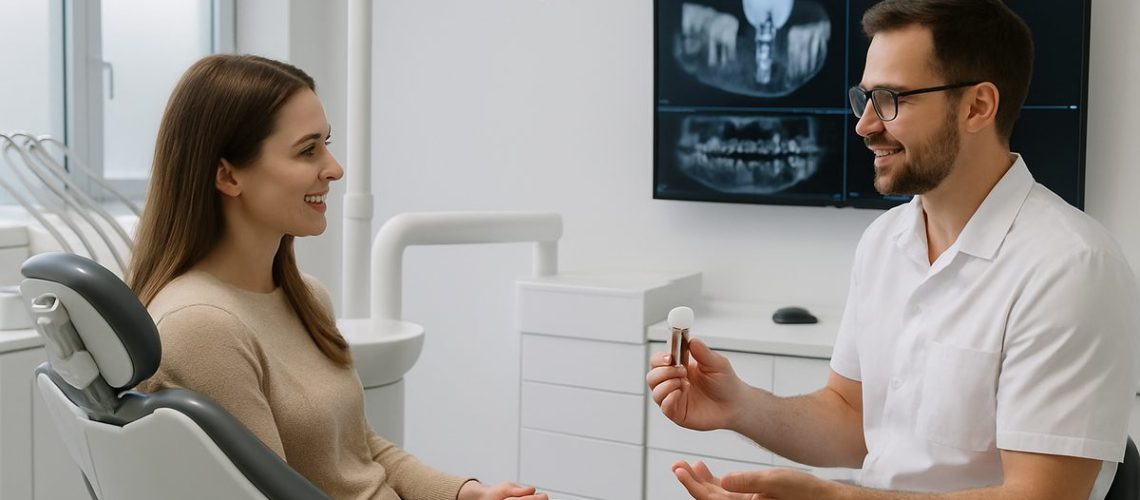
If you’re searching for the best place for dental implants, this guide will help you find the ideal location. It’s for anyone weighing implant care options — from replacing a single missing tooth to full-arch replacements. You’ll learn what “best” really means, the clinical signs to look for, what the process looks like, how costs are determined, and a clear checklist to choose a practice.
By the end, you’ll know how to find the best place for dental implants in Dallas–Fort Worth or near you.
What “best place for dental implants” really means
Look beyond marketing. The best place for dental implants prioritizes surgeon training, patient safety, modern technology, predictable outcomes, patient comfort, and transparent pricing. A top practice combines surgical skill with clear communication so you understand risks, timelines, and realistic results before you commit.
Top clinical factors to evaluate
Board certification and surgical experience
Choose surgeons who are board-certified or board-eligible in oral and maxillofacial surgery. These surgeons complete hospital residencies and receive extensive training in bone, nerve, and airway management. More experience generally means fewer complications and faster, more predictable recoveries.
Treatment range and advanced options
A strong clinic offers single-tooth implants, multiple implants, and full-arch single-day restorations. They should discuss when zygomatic implants or other advanced approaches are needed for severe bone loss. Make sure the practice can handle complex cases or refer you to a specialist who can.
Comfort and anesthesia options
Ask about on-site IV sedation and anesthesia. Comfort options, clear pain-control plans, and attentive post-op support reduce anxiety and speed recovery. Practices that manage anesthesia in-house with trained staff raise the standard of safety and comfort.
Technology and lab capabilities that improve outcomes
Digital planning and in-house lab work speed treatment and improve fit. When a practice uses 3D imaging, guided surgery, and same-day fabrication, you’ll often get fewer visits and more precise results. These tools lower surprises and help the team coordinate surgery and prosthetics.
What to ask about tech
Ask if the practice uses CBCT imaging, dynamic surgical guidance, intraoral scanners, 3D-printed guides, photogrammetry, or same-day milling. Each technology helps with accuracy, reduces chair time, and improves the final fit of crowns and bridges.
Typical treatment process and what to expect
Most plans start with a consultation and 3D imaging, followed by digital planning. Surgery day may include implant placement and provisional prosthetics. Healing typically takes weeks to months before final restorations are completed. Expect regular follow-ups to check integration and soft-tissue health.
Recovery timeline and follow-up
Initial healing typically takes 1–2 weeks for soft tissue and several months for bone to integrate. Normal signs include mild swelling and soreness that improve each day. Contact the office if you have uncontrolled pain, fever, or unusual drainage.
Costs, insurance, and financing
Costs vary depending on the number of implants, grafting needs, and prosthetic type. Look for transparent pricing, clear written estimates, and options like payment plans or third-party financing. Most dental insurance plans cover parts of some services, but rarely the full cost of implants.
How to choose between practices
Before booking, verify the surgeon’s credentials, available technologies, before-and-after photos, patient reviews, referral relationships with dentists, and request a written estimate. Compare whether a practice offers same-day prosthetics and clear post-op support.
About Texas Center for Oral Surgery & Dental Implants
Texas Center is a family-owned specialist center with board-certified oral and maxillofacial surgeons, an in-house digital lab, on-site IV sedation, and a focus on minimally invasive, predictable implant care. Their team combines surgical experience with same-day prosthetic capability for patients seeking the best place for dental implants in Dallas–Fort Worth.
Key technologies they use
They use X-Nav dynamic guidance, Roland zirconia milling, Asiga 3D printers, PIC photogrammetry, Trios scanners, I-CAT CBCT, and PRF to support healing.
Why patients choose them
Patients pick the Center for combined surgical expertise, concierge support, advanced same-day options, and transparent pricing.
Next steps and simple call to action
Book a consultation online to request a digital treatment plan, estimate, and learn if this is the best place for dental implants in Dallas–Fort Worth for your needs.