
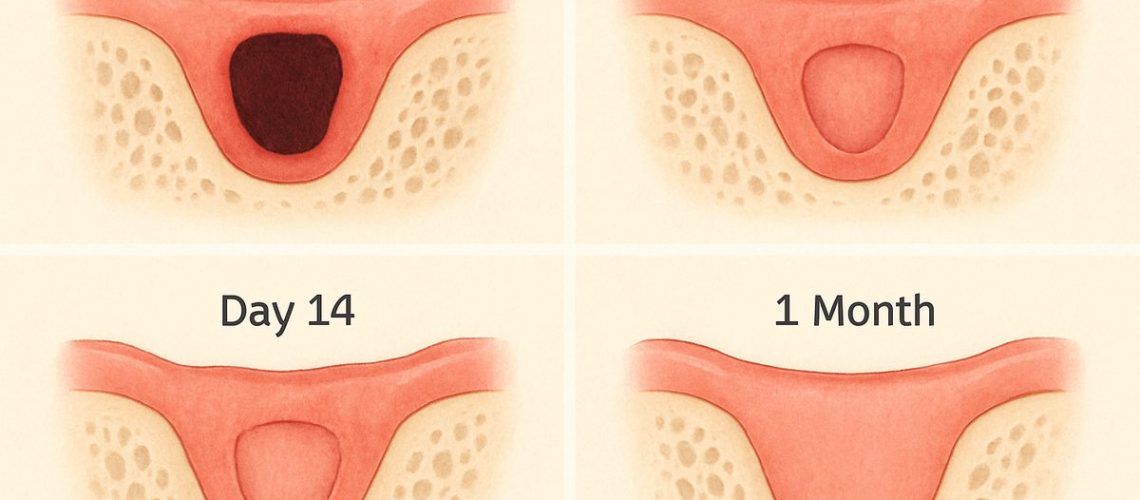
Your recovery from wisdom tooth extraction will feel different for everyone, but most people follow a similar path. Expect initial bleeding and clotting, with peak swelling and soreness occurring within the first 48 hours, followed by gradual improvement over the next week. You may feel numbness, tingling, or jaw stiffness for a short time.
This guide explains the typical timeline, common sensations, warning signs, home care, pain management, and when to contact your surgeon, so you know what to expect at your wisdom tooth extraction site in Dallas–Fort Worth.
Normal healing timeline for your wisdom tooth extraction site
Day 0–2: A blood clot forms in the socket to protect the bone and nerves. Initial bleeding should slow with gauze pressure. Swelling and soreness usually peak in this window. Keep your head elevated and use ice as directed.
Day 3–7: Swelling begins to fall, and pain should improve each day. Soft tissue (gum) starts to close over the socket. Small amounts of discolored drainage or a mild odor can be normal as the healing process continues.
2 weeks–3 months: The socket fills with new soft tissue, and then bone gradually remodels. You may still feel some firmness or sensitivity for weeks. Most daily activities and normal chewing return within a few weeks, while full bone healing can take several months.
Common sensations at the wisdom tooth extraction site and why they happen
Bleeding and clotting
A blood clot forms to seal the socket and protect the underlying bone and nerves. Minimal oozing for 24–48 hours is a common occurrence. Firm, gentle pressure with gauze usually stops bleeding. Avoid spitting or sucking actions that can dislodge the clot.
Pain and swelling
Pain and swelling are the body’s inflammatory response to surgery. Pain is usually worst in the first 48 hours and improves with time and pain medicine. Swelling typically peaks around day 2–3 and then gradually decreases. Warm salt rinses after 24 hours can help comfort and healing.
Numbness, tingling, and jaw stiffness
Nerve irritation or local swelling can cause temporary numbness or tingling in the area near the lip, chin, or tongue. Muscle soreness and limited jaw opening (trismus) are common for several days. Numbness that improves over days to weeks is expected; persistent numbness should be reported.
What is a dry socket, and how does it affect the wisdom tooth extraction site
A dry socket happens when the protective blood clot is lost before the socket has healed. This exposes bone and nerve endings and causes severe, worsening pain usually 3–5 days after extraction. You may see a hollow or empty-looking socket and have bad breath or a bad taste. Contact your surgeon if pain suddenly worsens after initial improvement.
Signs of infection or other complications at the wisdom tooth extraction site
Watch for red flags that are not part of normal healing, such as fever over 101°F, persistent or worsening pain after day 3, increased or spreading swelling, pus or foul drainage, difficulty breathing or swallowing, or numbness that suddenly worsens. These signs may indicate infection or other complications and require prompt evaluation. Early treatment prevents more serious problems.
At-home care for your wisdom tooth extraction site (first 2 weeks)
Immediate steps: Bite on gauze as directed to control bleeding. Keep your head elevated and avoid heavy lifting or bending. Do not spit or use straws, which can dislodge the clot.
Cleaning: Begin gentle salt-water rinses (1/2 teaspoon salt in 8 ounces warm water) 24 hours after surgery, 3–4 times daily, especially after eating. Brush nearby teeth gently and avoid poking the socket with your toothbrush or fingers.
Diet and activity: Stick to soft foods for the first few days—such as yogurt, applesauce, mashed potatoes, smoothies (without straws), and soft-boiled eggs. Gradually reintroduce firmer foods as comfort allows. Resume normal activity slowly; allow several days for rest.
Things to avoid: Smoking, using a straw, spitting, touching the site, and vigorous exercise for at least 48–72 hours. These increase the risk of dry socket and delayed healing.
Pain control and medication guidance for the wisdom tooth extraction site
Over-the-counter options commonly used include ibuprofen (typically 400–600 mg every 6–8 hours as needed) and acetaminophen (typically 500–1000 mg every 4–6 hours as needed). However, always follow your surgeon’s instructions and consider the maximum daily limits. Often alternating acetaminophen and ibuprofen provides better control without heavy opioid use. Prescription meds and antibiotics: Your surgeon may prescribe short-term opioids for severe pain or antibiotics if infection risk is present. Take antibiotics exactly as directed. Use non-medication measures as well: apply ice packs for the first 48 hours, rest, and perform gentle jaw opening exercises once the soreness lessens.
When to call your surgeon about the wisdom tooth extraction site
Call if you have heavy bleeding that soaks through gauze pads repeatedly, severe uncontrolled pain despite medication, fever over 101°F, persistent numbness lasting beyond a week, increasing swelling, or pus/drainage from the site. When you call, please have ready: the time since surgery, current symptoms, medications you’re taking, and any known allergies.
Follow-up and long-term healing of the wisdom tooth extraction site
Most surgeons schedule a one-week follow-up to check on healing and remove sutures if necessary. They will assess the socket, look for signs of infection or dry socket, and advise on diet and activity. Full bone remodeling may take 3–6 months or longer, depending on the size of the socket and your overall health. Most people can resume normal chewing within a few weeks.
Why choose a board-certified oral surgeon for wisdom tooth extractions
Board-certified oral surgeons have advanced training in surgery, anesthesia, and the management of complications. They offer sedation options, precise techniques to protect nerves and bone, and plans to manage unexpected issues quickly. Specialist care can reduce risk and help you heal more predictably.
About Texas Center for Oral Surgery & Dental Implants
Texas Center for Oral Surgery & Dental Implants is a family-owned practice serving the Dallas–Fort Worth Metroplex, led by board-certified oral and maxillofacial surgeons. The team offers on-site IV sedation, digital planning, and experienced support to help patients recover well after wisdom tooth extraction in the Dallas–Fort Worth area.
Next steps — preparing for a smooth recovery at your wisdom tooth extraction site
Checklist: arrange a ride home if sedated, fill prescriptions before surgery, bring soft foods and a cold pack, and have an emergency contact for the office. If you have questions or need to schedule a consultation or follow-up, contact the surgical team to get personalized instructions for a safe recovery at your wisdom tooth extraction site in Dallas–Fort Worth.