
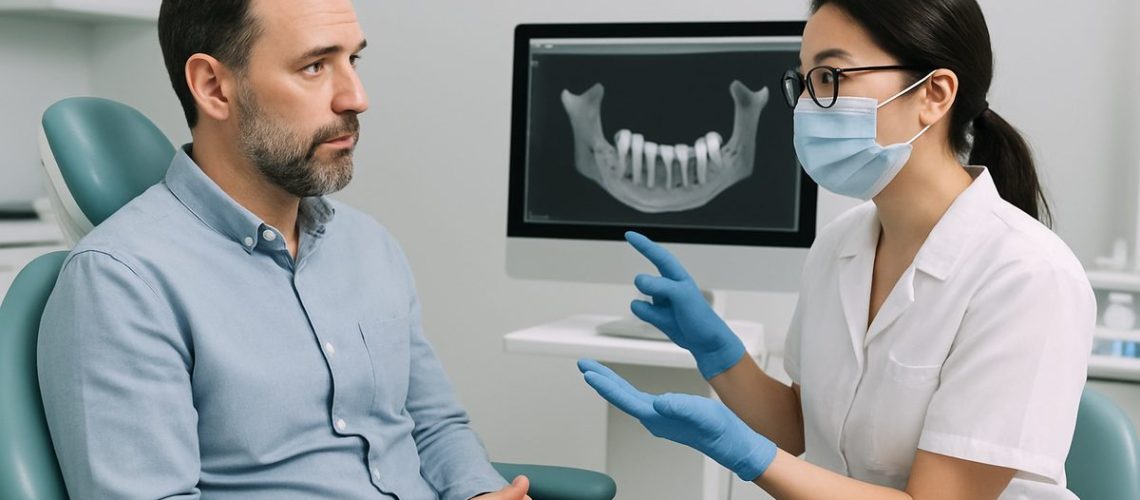
If you’ve typed “where can I get teeth implants,” you’re asking a common question: who should place them, what technology matters, and how long treatment will take. This guide walks through your options—types of providers, what to check at a consult, typical treatment paths and recovery—and shows how to compare care if you’re searching for “where can I get teeth implants in Dallas–Fort Worth” or nearby.
Types of providers who place dental implants
General dentists who offer implants. Many general dentists place single implants and restorations. They can be convenient for routine cases and ongoing car,e but may refer complex surgeries elsewhere. Oral and maxillofacial surgeons: advanced surgical skills for complex cases.
Oral surgeons handle complicated extractions, bone grafting, sinus lifts, and full-arch implant surgery. They train in hospital residencies and manage surgical risks.
Periodontists and prosthodontists: bone, gum, and prosthetic specialists. Periodontists focus on gum and bone health; prosthodontists design complex restorations and full-mouth prosthetics. Both work closely with surgeons for predictable results.
Dedicated implant centers vs private specialty practice. Some centers provide a full team and in-house labs for faster, coordinated care. Private specialty offices may offer a more personalized experience. Both can deliver excellent outcomes—verify credentials and technology.
What to Look for When Asking “Where can I get teeth implants?”
Training and credentials
Select providers who are board-certified, have completed hospital residencies, and possess years of experience with implants. Ask how many similar cases they’ve done.
Technology and imaging
CBCT 3D scans, digital planning, and dynamic surgical guidance improve accuracy and safety. These tools reduce surprises and protect nerves and sinuses.
On-site lab and same-day options
In-house milling and 3D printing enable teams to produce surgical guides and provisional teeth on the same day, thereby shortening treatment time and reducing the need for lab transfers.
Sedation and surgical safety
Look for offices offering IV sedation with monitored anesthesia and clear recovery protocols. Surgical teams should adhere to strict safety and emergency protocols.
Costs, financing, and warranties
Ask for transparent pricing, written estimates, payment plans, and warranty terms for implants and restorations. Compare total cost, not just the initial fee.
Typical treatment paths and what each involves
Single-tooth implant: Typically involves consultation, implant placement, healing (3–6 months), and final crown. Some cases use immediate provisional crowns. Multiple implants and implant-supported bridges: When adjacent teeth are missing, implants can support bridges to replace them. Treatment includes planning, staged surgery or same-day provisionals, and final restoration. Full-arch solutions (All-on-4/All-on-X) and single-day options: Full-arch protocols often allow for extraction, implant placement, and a fixed provisional restoration in one visit, with a final prosthesis to be placed later. These procedures require careful planning and the expertise of experienced surgeons. When bone grafting or sinus lifts are needed, grafts or sinus lifts are performed before or during implant placement, which lengthens treatment and healing times.
Questions to ask at a consultation
– How many implant procedures like mine have you performed?
– Will I receive CBCT 3D imaging and a digital treatment plan?
– Can restorations be made on-site, and how long will I be without teeth?
– What sedation options and recovery should I expect?
– What are the total costs, payment plans, and warranties?
Typical timeline and recovery expectations
From consultation to final restoration, the process usually spans weeks to months. Single implants often take 3–6 months; grafts or complex cases can take longer. Healing depends on bone quality, overall health, and smoking status. Short-term recovery is measured in days to weeks, while long-term maintenance includes hygiene and periodic check-ups.
Why consider a specialist practice like the Texas Center for Oral Surgery & Dental Implants
If you’re asking “where can i get teeth implants in Dallas–Fort Worth,” Texas Center offers board-certified oral and maxillofacial surgeons with decades of combined experience. They use CBCT, dynamic surgical guidance, in-house milling and 3D printing, on-site IV sedation, and coordinated digital workflows to deliver predictable, efficient care and same-day provisional options.
Next steps: finding the right place to get your implants
Use referrals, online reviews, and consultations to compare options. Bring prior X-rays, a list of questions, and your medical history to the first visit. Schedule a consultation with a board-certified implant team to receive a personalized plan and a clear cost estimate.