
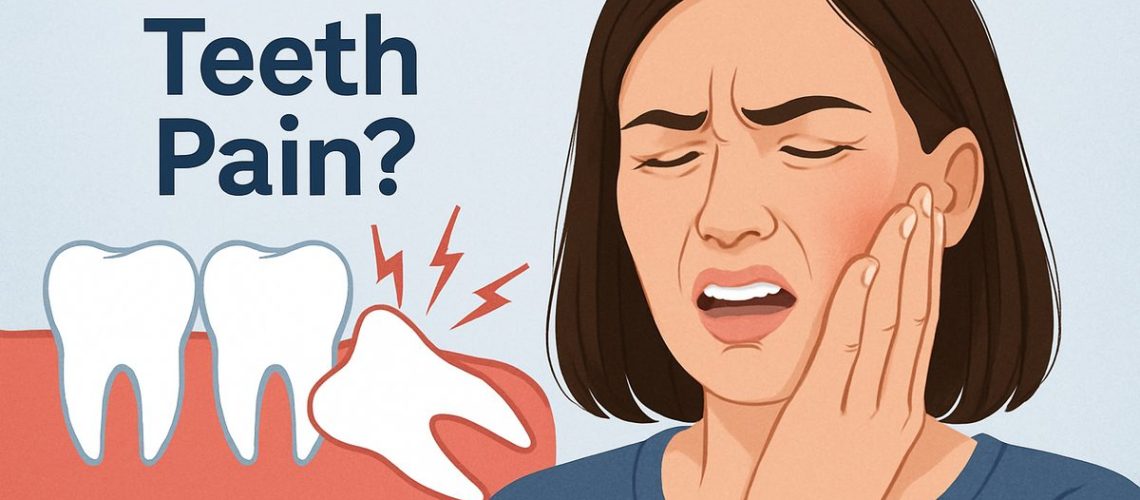
Wisdom teeth are the last set of molars to come in, usually between the ages of 17 and 25. For many people, these teeth cause pain because they erupt late into a jaw that may be too small, or they push against other teeth and gum tissue. A very common question is: Does wisdom tooth pain go away?
This post explains why wisdom teeth hurt, the primary causes of pain, simple home remedies you can try, warning signs that require prompt care, and what to expect during a dental or surgical visit.
Why wisdom teeth often hurt
Wisdom teeth can erupt normally or run into problems. Normal eruption means the tooth breaks through the gum in the right position, and the mouth has room. Problems occur when there’s not enough space or the tooth grows at an angle. Because wisdom teeth typically erupt late, when jaw growth is mostly complete, they often experience crowding, partial eruption, or abnormal angles. Limited space and the force of the eruption are common reasons for soreness and pain.
Common causes of wisdom teeth pain
Impaction
An impacted wisdom tooth is one that is trapped under gum or bone. It may be angled toward the next tooth, toward the back of the mouth, or stuck beneath the jawbone. Pressure from an impacted tooth can cause steady or sharp pain as it pushes on nearby teeth and bone. Impacted teeth rarely improve on their own and often require evaluation.
Infection and pericoronitis
When a wisdom tooth is only partly through the gum, a flap of tissue can cover part of the crown. Food and bacteria can collect under that flap, causing inflammation or infection known as pericoronitis. Symptoms include swollen gums, pain, a bad taste or smell, and sometimes fever. This infection often worsens without treatment.
Crowding and bite pressure
Even if a wisdom tooth erupts, it can push against other teeth and change your bite. That pressure can create a dull, persistent ache or tooth sensitivity. Crowding-related pain may come and go but tends to persist while the tooth is moving or pressing on adjacent teeth.
Other causes: cysts, referred pain, and sinus issues
Less commonly, cysts can form around an impacted tooth, causing swelling or bone damage. Pain from a wisdom tooth can also be “referred” pain felt in the ear, jaw joint, or head. Upper wisdom teeth near the sinuses can sometimes cause sinus pressure or be mistaken for sinus pain. These causes are less common but important to diagnose.
Does wisdom teeth pain go away?
Short answer: sometimes, but not always.
Mild soreness and pressure during normal eruption often ease after a few days to a couple of weeks once the tooth breaks through fully. However, pain caused by impaction, ongoing infection, cysts, or damage to nearby teeth usually will not go away without treatment. If pain persists, worsens, or returns frequently over several weeks, it is unlikely to resolve on its own.
Typical timelines:
– Eruptive soreness: 1–2 weeks, gradually improving.
– Pericoronitis or infection: will often worsen without antibiotics and dental care.
– Pain from impaction or crowding: persistent until the tooth is removed or managed.
At-home relief you can try right now
Over-the-counter pain meds and ice
Ibuprofen or naproxen can reduce inflammation and pain; follow the label for dosing and don’t exceed the recommended daily maximum. Acetaminophen can be used if you cannot take NSAIDs. Use a cold pack against the cheek for 10–20 minutes at a time to reduce swelling and numb pain. If you have medical conditions or are taking other medications, consult your healthcare provider before starting a new pain medication.
Salt water rinses and oral hygiene
Gently rinsing with warm salt water (about 1/2 teaspoon of salt in 8 ounces of water) several times a day can help flush food debris and reduce bacteria under a partially erupted tooth. Continue normal brushing and flossing, but be gentle around the sore area to avoid further irritation.
Diet and temporary lifestyle changes
Eat soft foods and avoid crunchy, sticky, or very hot items that can irritate the gums. Try to chew on the opposite side and sleep with your head slightly elevated to reduce swelling. These measures provide short-term relief but are not a substitute for professional care if problems persist.
Warning signs: when to see a dentist or oral surgeon
Seek prompt care if you have any of these red flags: – Severe or rapidly worsening pain – Swelling of the face, jaw, or neck – Fever – Trouble breathing or swallowing – Pus, a bad taste, or persistent bad breath – Limited mouth opening (trismus) – Numbness in the lip, chin, or tongue – Pain that lasts more than a week despite home treatment Infections in the mouth can spread quickly. If you see signs above, get evaluated right away.
What happens at the dental or surgical visit
Exam and imaging
The dentist or oral surgeon will examine the mouth and may take X-rays or a 3D scan to see the tooth position, roots, nearby nerves, and sinuses. Imaging helps decide whether a simple extraction or a surgical approach is needed and reduces risks during treatment.
Treatment options
Options include monitoring if the tooth is low-risk, a short course of antibiotics for active infection, a simple extraction for erupted teeth, or surgical removal for impacted teeth. If needed, sedation or IV anesthesia can make the procedure comfortable. Your provider will discuss anesthesia options and refer you if additional medical clearance is required.
Recovery expectations
After removal, pain often peaks in the first 48 hours and then improves over the next week. Swelling and chewing limitations are common for several days. Follow home care instructions, take prescribed medications, and keep follow-up visits. Rare complications, such as dry socket or nerve irritation, can occur. If pain worsens or other concerns arise, please call your surgeon.
About Texas Center for Oral Surgery & Dental Implants
Texas Center for Oral Surgery & Dental Implants is a family-owned, specialist practice serving the Dallas–Fort Worth Metroplex. Their team includes board-certified oral and maxillofacial surgeons who offer on-site IV sedation, advanced 3D imaging, and digital planning tools to make extractions safe and predictable. The Center uses modern techniques and in-house technology to support faster recovery and coordinated care with referring dentists.
Quick takeaway
Does wisdom teeth pain go away? Mild eruptive soreness can resolve on its own, but pain from impaction, infection, or structural problems usually needs treatment. If you experience severe symptoms, signs of infection, or persistent pain lasting more than a week, schedule a consultation with an oral surgery team to receive a timely diagnosis and the appropriate care.